What is water extraction and why the first few hours matter most
You get home and the floor is wet. Maybe it's a burst pipe under the sink, an appliance that failed while you were at work, or water that found its way in during a storm. The standing water is obvious — but it's only part of the problem.
What you can't see is already happening inside your walls, beneath your floors, and in the subfloor underneath. And how quickly you respond in the next few hours will determine whether you're dealing with a water damage cleanup or a much larger, more expensive problem weeks from now.
Understanding what water extraction is — and why timing matters so much — can save Atlanta homeowners thousands of dollars and a lot of unnecessary stress.
What water extraction actually is
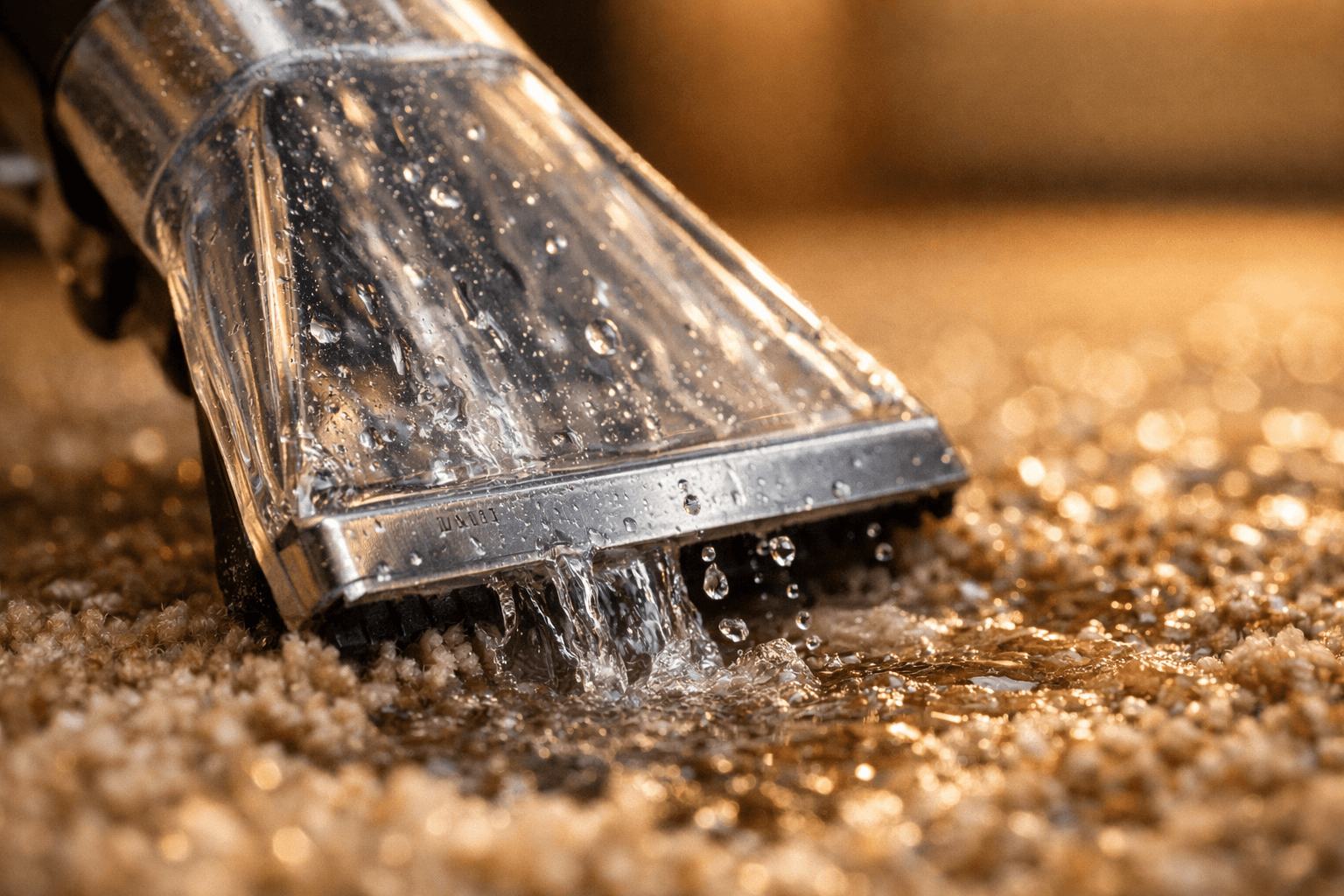
Water extraction is the process of removing standing and absorbed water from a property using professional-grade equipment before the drying phase begins. It typically involves truck-mounted or portable extractors, submersible pumps, and specialized vacuums capable of pulling water out of carpet, padding, hardwood flooring, and structural materials.
It's worth being clear about one thing: extraction and drying are not the same step. Extraction removes the bulk water first. Drying — using industrial dehumidifiers and high-velocity air movers — then removes the residual moisture that remains inside materials after the water has been pulled out. Both steps are required, and skipping or rushing either one leads to incomplete restoration.
The type of water involved also affects how extraction is handled. According to IICRC standards, water damage falls into three categories: Category 1 (clean water from a sanitary source like a supply line), Category 2 (gray water from sources like washing machines or dishwashers, which may carry contaminants), and Category 3 (black water from sewage backups or floodwater, which requires full protective protocols). If you want a deeper breakdown of what each category means for your home, we cover it in detail in our guide to water damage categories.
Why the first few hours matter more than most people realize
Water moves fast. Within the first hour or two of a water intrusion event, moisture begins wicking into drywall, insulation, and subfloor materials. What started as a wet floor quickly becomes saturated walls and hidden pockets of moisture that a mop and a fan will never reach.
The EPA notes that mold can begin to develop within 24 to 48 hours of water exposure under the right conditions — and Atlanta's humidity means those conditions are almost always present. Here's roughly how the timeline works:
1–2 hoursWater wicks into porous materials. Drywall begins absorbing. Hardwood flooring starts to swell.
24–48 hoursMold growth becomes likely in areas that remain damp. Odors begin to develop. Subfloor materials become saturated.
72 hoursStructural materials begin to deteriorate. Belongings that might have been salvageable are no longer. The scope of the project expands significantly.
Beyond one weekWhat began as a water damage job can become a full mold remediation project — a substantially more involved and more expensive process.
This is not meant to alarm — it's just the practical mechanics of how water and organic building materials interact. It's also why reputable restoration companies offer 24/7 emergency response. Waiting until morning genuinely changes the outcome.
What happens when you call a professional water extraction service
A lot of homeowners don't know what to expect after they make the call to a water damage restoration company, so here's what the process actually looks like:
- Assessment: Technicians arrive and identify the water source, classify the water type, and use moisture meters and thermal imaging cameras to map the full extent of saturation — including areas inside walls and under flooring that aren't visible to the naked eye.
- Water removal: Using truck-mounted or portable extractors, technicians remove standing water from floors, carpets, and affected surfaces. For significant flooding, submersible pumps handle the bulk volume before extractors take over.
- Content evaluation: Furniture, personal belongings, and materials are assessed for salvageability. Items that can be saved are moved and dried separately. For heavily saturated contents, pack-out services may be recommended.
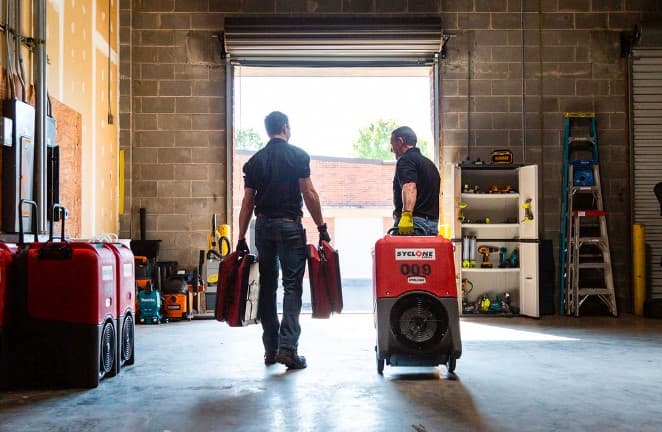
- Structural drying setup: Industrial dehumidifiers and high-velocity air movers are placed throughout the affected area to begin drawing moisture out of structural materials. This phase typically runs for three to five days.
- Daily monitoring: Technicians return each day to check moisture readings against target levels and adjust equipment placement as needed. Drying is not declared complete until materials meet industry standards.
- Documentation: Every step is documented with moisture readings, photos, and equipment logs. This documentation is critical for insurance claims and gives you a complete record of what was done and why.
DIY water extraction: when it's fine, and when it isn't
For very minor incidents — a small sink overflow caught within minutes, on a hard non-porous tile floor with no adjacent drywall contact — a wet-vac and a good fan may genuinely be sufficient. There's no need to overcomplicate a small, contained spill.
The problem comes when homeowners apply the same approach to larger events and assume that because the surface looks dry, the job is done.
Household fans circulate air but don't create the pressure differential needed to pull moisture out of wall cavities and subfloor materials. Consumer dehumidifiers are significantly underpowered compared to commercial-grade units — a single industrial dehumidifier can remove 30 to 50 gallons of water per day from the air, compared to a few gallons for most residential units. And without moisture meters, there's no objective way to confirm that materials have actually dried to an acceptable level.
The hidden risk of incomplete drying isn't just more damage in the short term. It's mold growth that shows up months later, often discovered during a renovation or a home sale inspection, long after the original incident has been forgotten.
A note for Atlanta homeowners specifically
Atlanta's climate creates a particular challenge for water damage recovery. The metro area's humidity — especially during the summer months — means that ambient moisture levels are already elevated, which slows evaporation and makes DIY drying even less effective than it would be in a drier climate.
Flash flooding and severe storms are also part of Atlanta life. FEMA data on flood recovery consistently shows that response time is one of the strongest predictors of total recovery cost. Older homes in neighborhoods like Tucker, Decatur, East Atlanta, and Stone Mountain are particularly susceptible to crawlspace water intrusion and subfloor saturation — areas that show no visible damage from inside the home but can harbor significant moisture for weeks.
Serenity Restoration is based in Tucker and serves the greater Atlanta metro area around the clock. If you're dealing with water damage and aren't sure whether it requires professional attention, our free property inspection is a no-pressure starting point.
Frequently asked questions
How long does water extraction take?
The extraction itself — removing standing water — can often be completed in a few hours depending on the volume of water. The drying phase that follows typically takes three to five days, sometimes longer for severe saturation or large affected areas.
Does insurance cover water extraction?
In most cases, yes — if the water damage was sudden and accidental (a burst pipe, appliance failure, or storm damage). Gradual leaks that went unaddressed are typically not covered. Your restoration company can help document the damage in a way that supports your claim.
Can water extraction save carpet?
It depends on the category of water involved and how quickly extraction begins. Carpet affected by clean water (Category 1), extracted promptly, can often be saved. Carpet that has been wet for more than 24–48 hours, or that was contacted by gray or black water, usually needs to be replaced.
How do I know if all the water has been removed?
This is where professional equipment matters. Moisture meters measure the actual moisture content of structural materials and compare it to established dry standards. Surface dryness is not a reliable indicator — materials can feel dry to the touch while still holding moisture levels that will support mold growth.
---
Serenity Restoration provides 24/7 emergency water extraction and water damage restoration services across the greater Atlanta area, including Tucker, Norcross, Decatur, Marietta, and surrounding communities. Call 678-648-1294 or request a free inspection online.